
Robotic Nipple‑Sparing Reconstruction
Reconstruction following a nipple‑sparing mastectomy performed through a single small 4 to 5 cm incision.
What robotic nipple-sparing reconstruction is
In a nipple‑sparing mastectomy the breast tissue is removed while the skin and the nipple are kept. In the robotic version, the surgeon reaches the breast through the armpit rather than through an incision on the breast itself, using a single‑port robotic system.
Because the mastectomy and the reconstruction go through the same opening, there is usually no separate incision on the breast for the reconstruction. The incision in the armpit is typically only about 4 to 5 cm. A DIEP or LAP flap sometimes needs a short additional incision in the fold beneath the breast so the tissue can be placed.
Why sensation matters
Sensation is an often-overlooked consequence of a mastectomy. A conventional mastectomy usually leaves the chest numb. Some of that feeling can return on its own, but for many patients it does not. It matters for more than comfort: without protective sensation a patient cannot reliably feel heat, and burns from ordinary things — heating pads, hot water bottles, sun exposure — are a documented risk.
The consequences run wider than safety. In a 2023 study of women’s own accounts after mastectomy, patients described feeling disconnected from their breasts — reconstructions that looked right but no longer felt like part of them — along with grief and a sense of loss. Numbness also affects intimacy and sexual response, and the women in that study said it was not something anyone had discussed with them beforehand.
That is one of the reasons for this approach. The published series of 20 patients reported sensation preserved in the nipple and areola (the darker skin around the nipple) in 65% of cases, and in the breast skin in 90–100%, at two weeks and at six months. Writing in January 2025, after a larger number of operations, UT Southwestern reported that about 80% of patients have retained sensation.
Dr. Farr and Dr. Haddock
This is a two‑surgeon operation. A breast surgical oncologist (a surgeon who specializes in breast cancer) performs the robotic mastectomy; Dr. Haddock performs the reconstruction.
Dr. Haddock has been performing reconstruction following robotic nipple‑sparing mastectomies at UT Southwestern since 2020.
Dr. Farr and Dr. Haddock worked together to develop this operation and performed the first single‑port robotic nipple‑sparing mastectomy with reconstruction in the United States. This team was also the first in the country to combine it with immediate PAP flap breast reconstruction.
They are one of the most experienced teams in the United States with this operation.
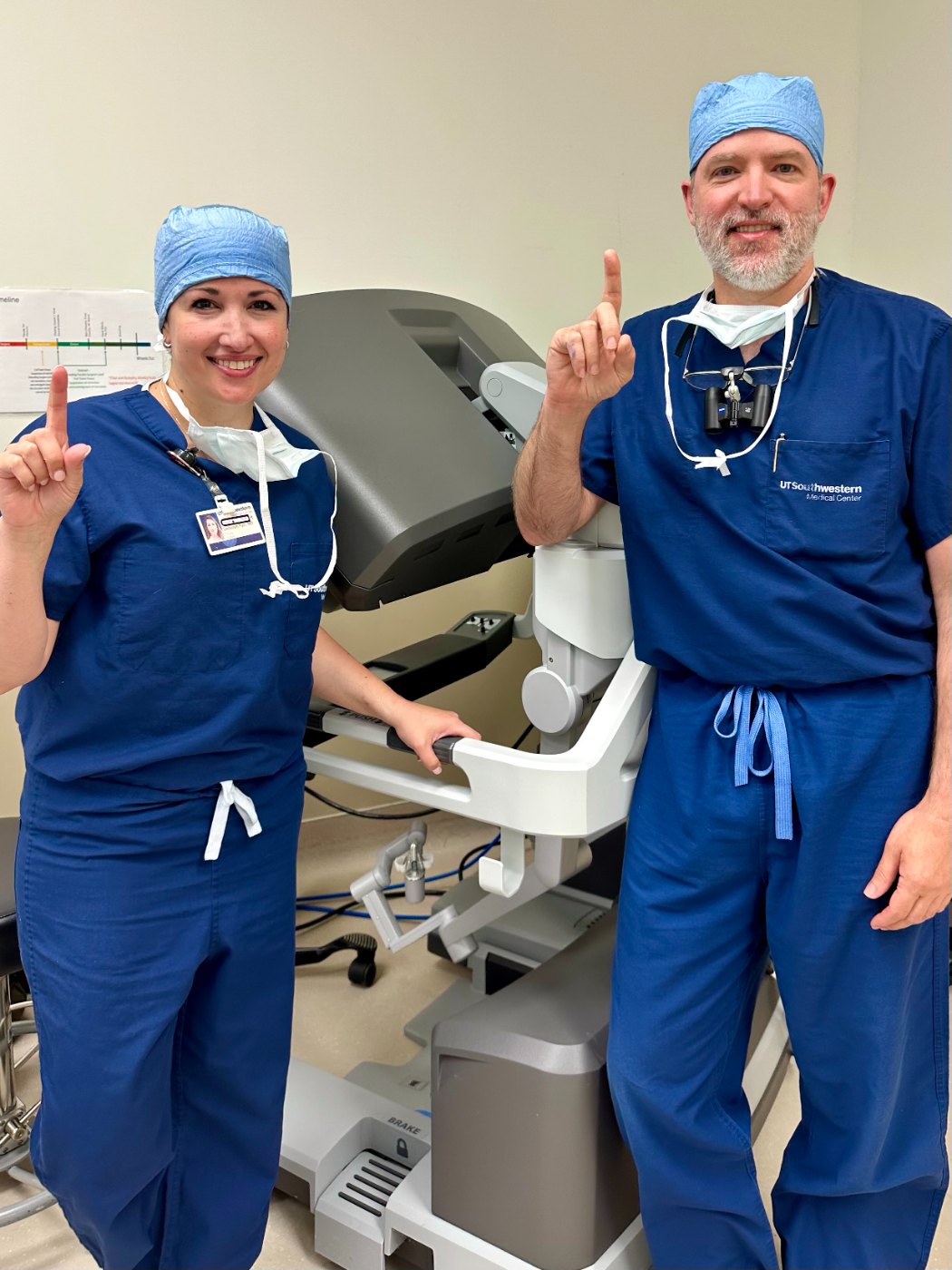
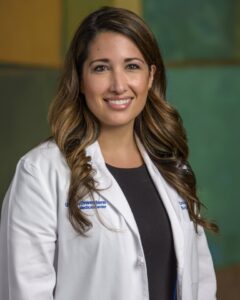
Dr. Farr and Dr. Haddock have performed this operation together since the first case in the United States.
What the reconstruction can be
The reconstruction done through that incision can be either of the two routes Dr. Haddock offers:
- An implant. Implant‑based reconstruction →
- Your own tissue. Dr. Haddock has performed DIEP, PAP and LAP flap reconstruction following robotic nipple‑sparing mastectomy, and has published the PAP flap combination.
Of the two routes, a tissue expander followed by a staged implant reconstruction is the more common approach with the robotic nipple‑sparing mastectomy. The other reconstruction options are similar to typical nipple‑sparing approaches, but there are nuances related to the robotic nipple‑sparing mastectomy.
“We performed a robotic single-port nipple-sparing mastectomy with immediate PAP flap breast reconstruction through the same 5 cm incision in the armpit.”
Dr. Nicholas Haddock, 2023
Is this an option for you?
Who is a candidate
Patients who are candidates for the robotic nipple‑sparing mastectomy are those for whom a mastectomy has been recommended, or who have chosen to have one. This includes both those with a diagnosis of breast cancer and those who are at high risk for breast cancer, such as patients with a genetic mutation (BRCA1 or BRCA2). Additionally, patients must have moderate‑sized or small breasts with limited to no sagging. If someone has larger breasts or more sagging, then in some situations a pre‑mastectomy reduction or lift can be performed to improve their candidacy.
Who is not
The exclusion criteria are similar to those for the standard nipple‑sparing mastectomy: the patient cannot have a cancer close to the nipple. This procedure is also not offered to patients who have breast implants in place at the time of their mastectomy.
Recovery
Recovery is dictated by the method of reconstruction. Most patients who undergo tissue expander or implant‑based reconstruction go home the same day. These operations are performed at William P. Clements Jr. University Hospital in Dallas. The risks specific to the robotic mastectomy itself are discussed with Dr. Farr at your consultation. Each operation’s page sets out its own recovery, including the length of any hospital stay:
The risks and potential complications of the reconstruction are set out on each of those pages as well.
Potential complications
As with any procedure, there are risks associated with nipple‑sparing mastectomy. Because the nipple, areola and overlying skin are preserved, they depend on a blood supply that the operation reduces — so partial or complete loss of the nipple, or of some breast skin, is possible. Bleeding, infection and fluid collection can also occur, and any of these can require a further operation.
Dr. Farr performs the mastectomy, and she goes through these risks and how they apply to you at your consultation. The risks and potential complications of the reconstruction itself are set out on each operation’s page.
Before & After
Front views from two of Dr. Haddock’s robotic nipple‑sparing reconstructions — before on the left, after on the right. Both are implant reconstructions.
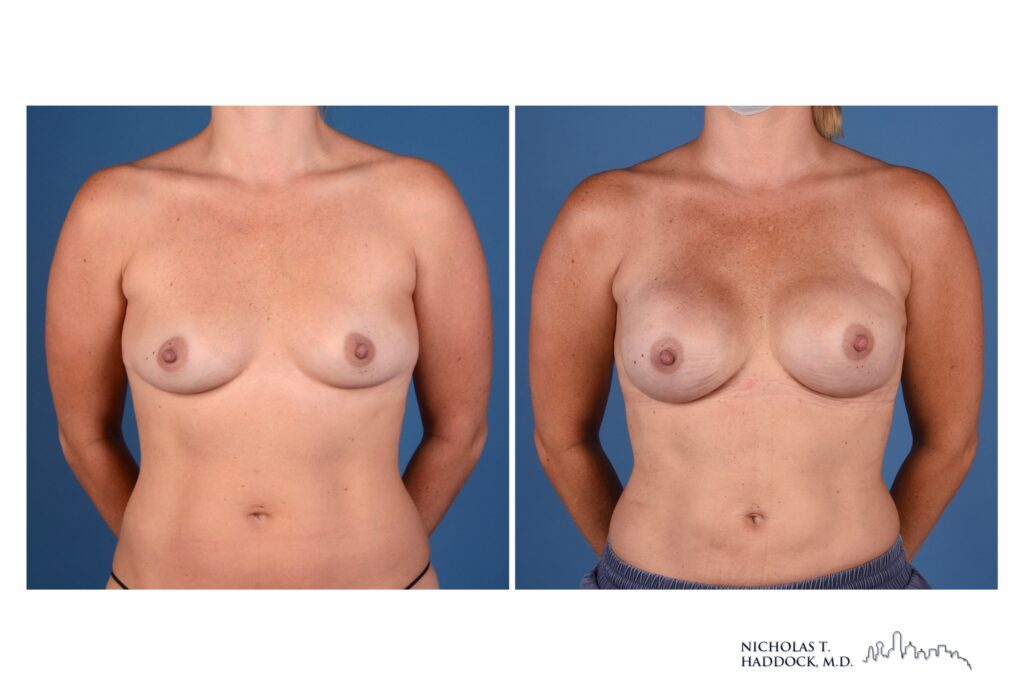
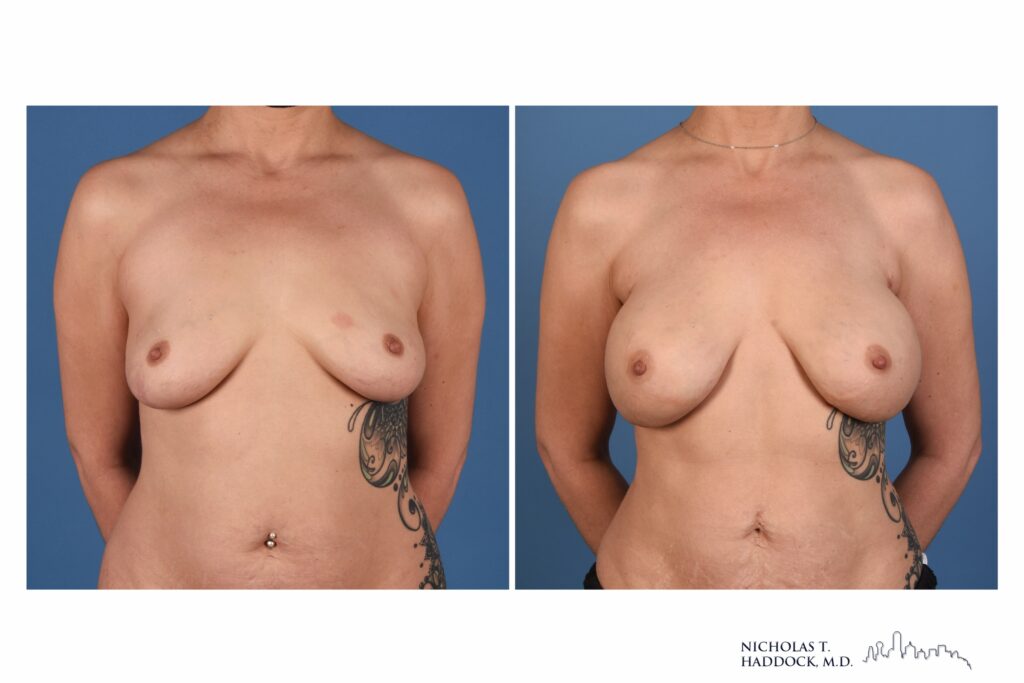
Individual results vary. Dr. Haddock posts a range of results to give patients a broad range of possible expectations. A large portion of the differences amongst results is a result of the patient anatomy and/or previous treatments. Photos are shared with each patient’s permission.
Published work
Dr. Haddock and his colleagues have published this work in the peer‑reviewed literature, including the first reported clinical series of single‑port robotic nipple‑sparing mastectomy in the United States.
- Farr DE, Haddock NT, Tellez J, Radi I, Alterio R, Sayers B, Zeh H. Safety and Feasibility of Single Port Robotic Assisted Nipple Sparing Mastectomy, First Clinical Series in the United States. JAMA Surgery. 2024 Jan 17.
- Haddock NT, Teotia SS, Farr D. Robotic Nipple‑Sparing Mastectomy and Breast Reconstruction with Profunda Artery Perforator Flaps. Plastic and Reconstructive Surgery. 2025 Sep 1;156(3):337e‑341e.
Dr. Haddock on this operation
Considering robotic nipple‑sparing reconstruction?
Tell us a little about yourself and Dr. Haddock’s office will reach out to help you schedule a consultation.
Request a Consultation