
Abdominoplasty
A tummy tuck removes loose skin and flattens the abdomen — what the operation involves, who it suits, and what recovery is like.
Abdominoplasty
An abdominoplasty, or tummy tuck, removes excess fat and skin from the abdominal wall and, in the majority of cases, restores weakened and separated muscles in order to create an abdominal profile that is smoother and firmer.
Many people suffer from an abdomen that protrudes or is loose and sagging, even those who have an otherwise normal body weight and proportion. Common causes of this are pregnancy, aging and significant fluctuations in weight. The goal of an abdominoplasty is to remove loose skin and flatten the abdomen. The scope of the procedure depends on how much excess skin and fat is present in the abdomen area and whether the abdominal muscles have become significantly loose (muscle laxity). Abdominoplasty procedures range from liposuction alone to a mini abdominoplasty or an abdominoplasty. In some situations an abdominoplasty can be combined with a breast augmentation or breast lift in what is often termed a “mommy makeover.”
Abdominoplasty does not involve a one‑size‑fits‑all procedure. Dr. Haddock’s treatment starts with a pre‑operative consultation at his office in Dallas. During the initial meeting he will take time to learn what you want to achieve from a tummy tuck and will discuss your specific goals with you to determine which treatment plan will best meet your needs.
Mini abdominoplasty and abdominoplasty
Limited / mini abdominoplasty
A limited or mini abdominoplasty is a smaller procedure. It is best suited to people who have loose abdominal muscles (muscle laxity) and a small amount of extra skin on the lower abdomen. The mini tummy tuck procedure involves a shorter incision than an abdominoplasty and in many cases there is no need for the navel to be moved. The low horizontal incision provides the surgeon with the access needed to tighten the muscles and remove excess skin. The resulting scar is similar to a cesarean section (C-section) scar, although it is longer. Liposuction is frequently an integral part of this procedure.
Abdominoplasty
An abdominoplasty allows maximum removal of excess skin and stretch marks, although stretch marks that extend above the navel cannot be completely eliminated. The abdominal muscles are tightened using internal sutures. The main scar is longer than that used for a mini abdominoplasty, is low in the center and curves up on both sides. Dr. Haddock takes great care to position the abdominoplasty scar in the bikini line, where it is covered by underwear or bathing suits and is not prominently visible. There is also a second small scar that encircles the navel. Both scars usually fade after one year but they are permanent and will always retain some degree of visibility. Their final width, texture, and color vary considerably from person to person.
Important considerations
- Not before a planned pregnancy — abdominoplasty should be deferred if future pregnancies are planned.
- It is not a weight‑loss procedure — the best candidates for tummy tucks are already at their ideal weight. The results will also be better maintained if there is no major weight fluctuation after the procedure.
- It can be uncomfortable — as a result of the muscle tightening required.
Before & After
Three of Dr. Haddock’s abdominoplasty patients — before on the left, after on the right.
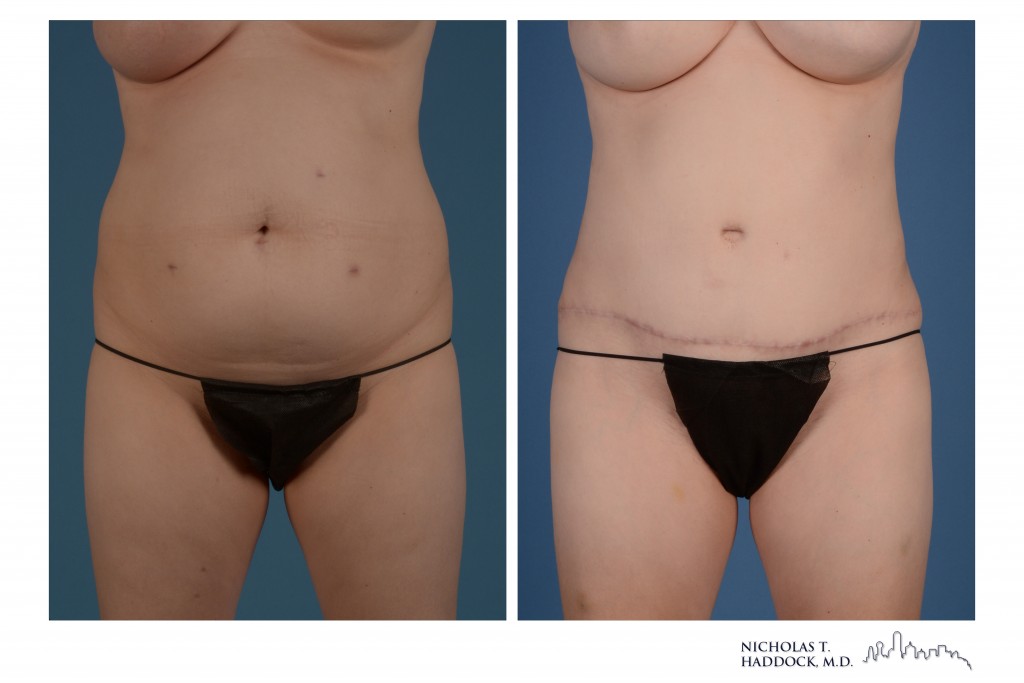
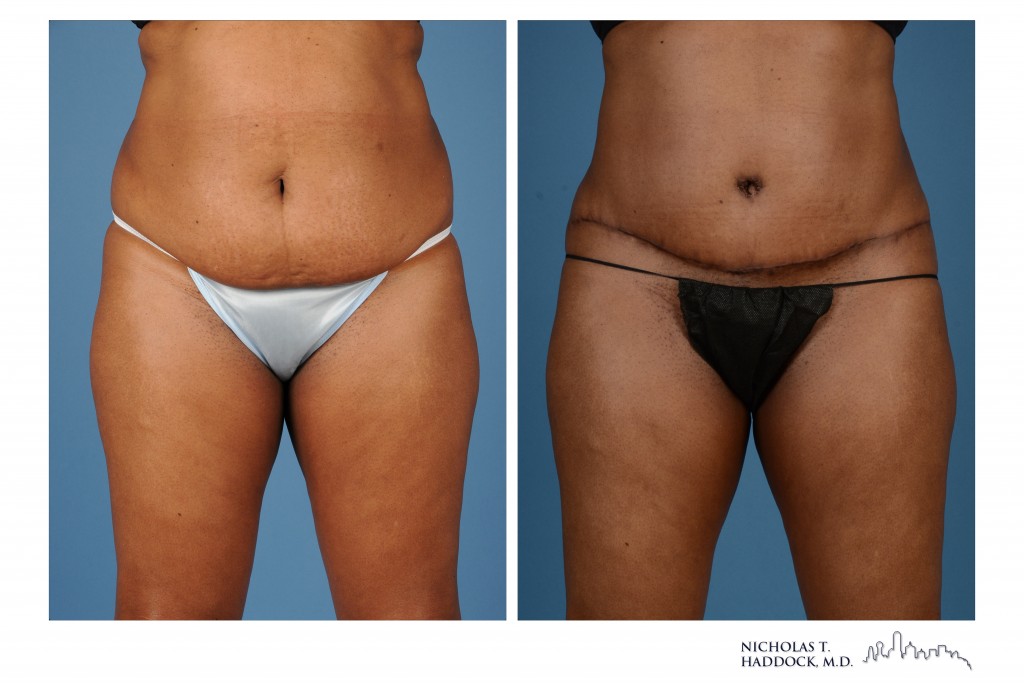
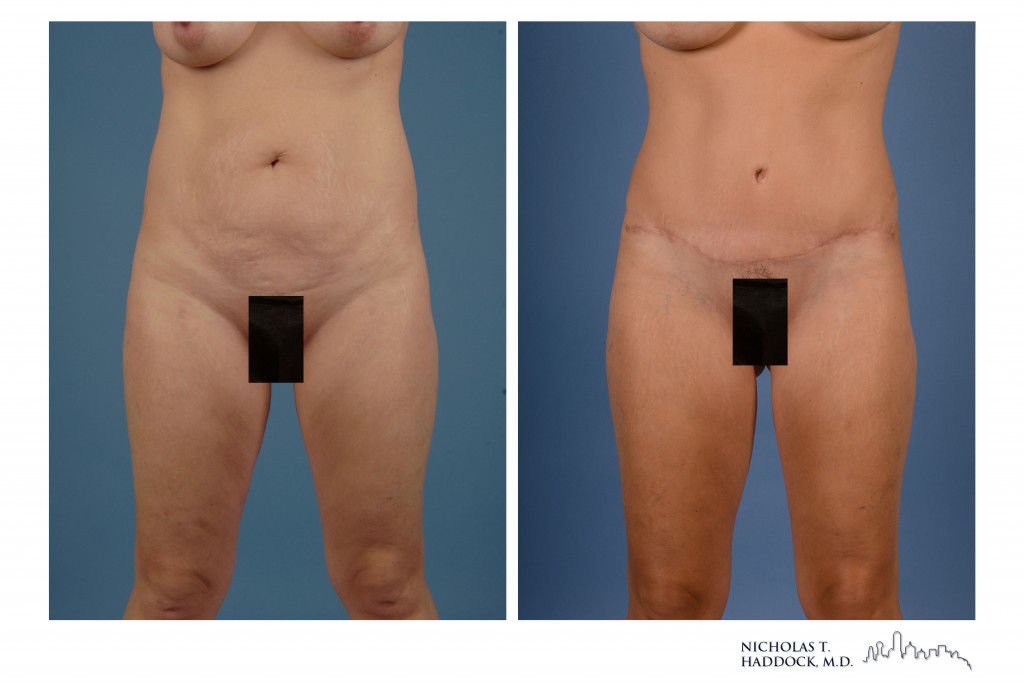
Individual results vary. Dr. Haddock posts a range of results to give patients a broad range of possible expectations. A large portion of the differences amongst results is a result of the patient anatomy and/or previous treatments. Photos are shared with each patient’s permission.
What can go wrong
Complications following abdominoplasty procedures are uncommon. However, a small number of patients do suffer from blood collection under the skin (hematoma), infections, and delayed healing due to skin loss at the incision site. A more significant potential problem is a blood clot in a leg vein, which can lead to serious problems such as a clot traveling to the lungs (pulmonary embolism). Specialized boots that pump blood through the legs are always used during surgery to reduce the risk of leg vein clots.
Smoking can increase the risk of complications and delay healing. It is therefore imperative that individuals who wish to undergo a tummy tuck completely stop smoking at least one month prior to surgery. “Cutting down” is not enough to eliminate the increased risk.
After surgery
Depending on the patient’s occupation, return to work is typically possible within ten to fourteen days.
- Walking — patients are advised to start walking the day after surgery, while protecting (guarding) the abdomen.
- Upright — you may return to walking normally, fully upright, after one week.
- Complete recovery — three to six weeks.
- Strenuous exercise — avoid for six weeks, although light exercise may begin sooner, depending on your progress.
Printable instructions for your operation and your recovery:
Considering an abdominoplasty?
Tell us a little about yourself and Dr. Haddock’s office will reach out to help you schedule a consultation.
Request a Consultation